
April 1st fades away, along with pranks and hoaxes that make you doubt everything on April Fools' Day.
But scammers never got that memo.
Springtime is prime season for cybercriminals—not because employees are careless, but because everyone's busy, distracted, and rushing. That's when sneaky, almost believable attacks slip past defenses, blending into regular work and only becoming dangerous when it's too late.
Below are three prevalent scams targeting sharp, well-intentioned professionals just trying to get through their workday.
As you read, ask yourself: Would everyone on my team stop and recognize these?
Scam #1: The Toll Road or Parking Fee Alert
An employee receives a text message like:
"You owe $6.99 in unpaid tolls. Pay within 12 hours to avoid penalties."
The message uses a real toll system name like E-ZPass, SunPass, or FasTrak, tailored to their state. The small fee feels harmless, so between meetings, they click the link and pay.
But the link is fake.
In 2024, the FBI logged over 60,000 complaints about these fake toll texts, and the number surged 900% in 2025. Over 60,000 bogus domains mimic official toll systems, showing how lucrative this scam is. Some messages even target states without toll roads.
Why does it work? The small amount seems safe, and most drivers have recently paid parking or tolls, making the texts feel legitimate.
Defense: Genuine toll agencies never demand instant payments via text links. Smart companies require employees to pay only through official websites or apps directly. Employees should never reply—even to "STOP"—because responding confirms their number is active and invites more scams.
Convenience lures victims; strict procedures protect them.
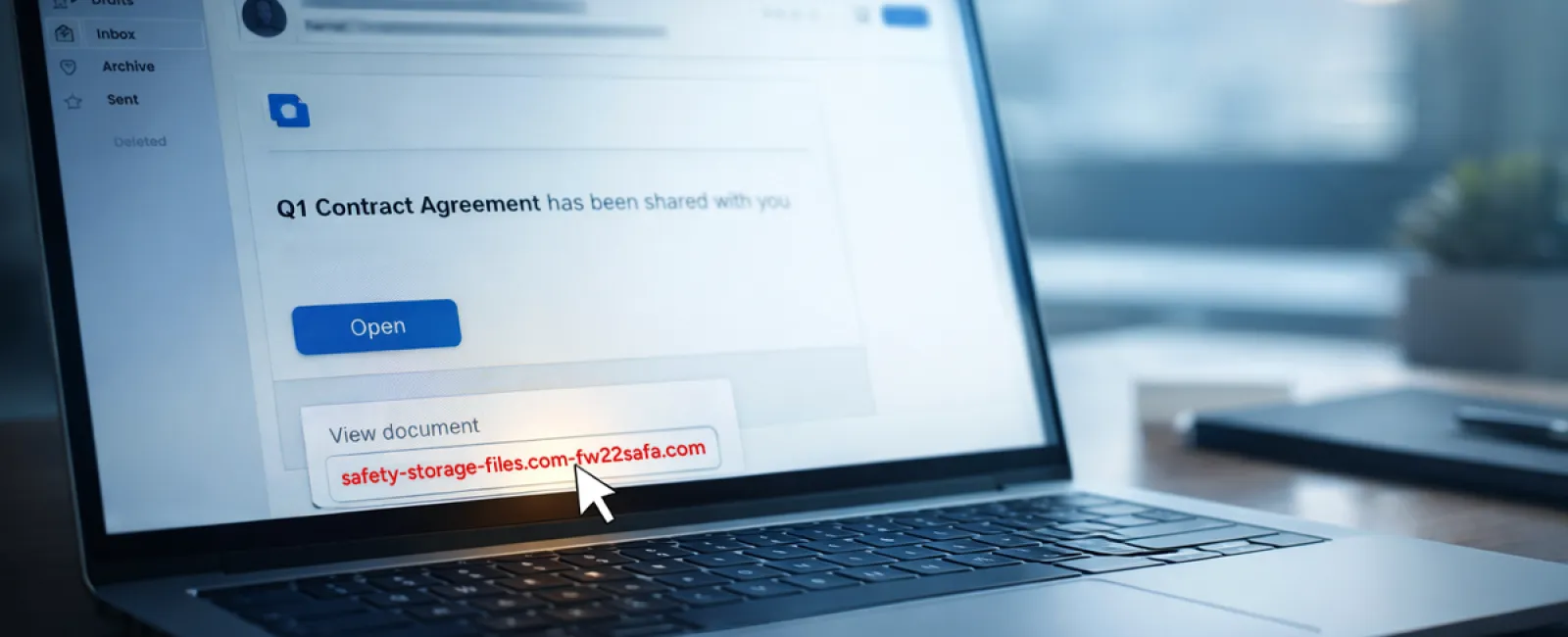
Scam #2: "Your File Is Ready" Email
This scam fits seamlessly into everyday workflows.
An employee receives an email claiming a document was shared—often a contract, spreadsheet, or file on platforms like DocuSign, OneDrive, or Google Drive.
The sender looks trustworthy, and the formatting matches real notifications.
They click, log in, and enter credentials—handing attackers access to your company's cloud system.
Phishing attacks leveraging platforms like Google Drive, DocuSign, Microsoft, and Salesforce rose 67% in 2025, with Google Slides phishing increasing over 200% within six months, according to KnowBe4.
Employees are seven times more likely to click malicious links from these trusted platforms because the alerts look authentic.
Some attackers create files inside compromised accounts and use platform-sharing features so emails come from official servers, bypassing spam filters.
Defense: If a shared file isn't expected, employees should avoid clicking email links and instead access their accounts directly via a browser. Companies can further reduce risks by limiting external sharing and enabling alerts for unusual logins—simple IT settings that take minutes to implement.
Consistent caution yields strong protection.
Scam #3: The Perfectly Written Phishing Email
Gone are the days when scam emails were riddled with poor grammar and glaring errors.
AI-crafted phishing emails now outperform human-made ones with a 54% click rate versus 12%, per a 2025 study.
These emails reference real companies, job titles, and workflows scraped in seconds from LinkedIn and websites.
They target specific departments: HR and payroll get fake employee verifications; finance teams receive fraudulent vendor payment changes. One test showed 72% of employees interacted with vendor impersonation emails—90% higher than other phishing types. The messages feel calm, professional, and urgent—just another normal workday email.
Defense: All sensitive requests (credentials, payment data, etc.) must be confirmed via a second method—phone, chat, or face-to-face. Employees should hover over sender emails to verify domains and treat urgent messages as red flags.
True security never relies on panic or pressure.
What It Really Boils Down To
All these scams exploit familiarity, authority, timing, and the assumption that "this will just take a moment."
The real vulnerability isn't careless staff—it's systems that expect everyone to always pause, verify, and make flawless decisions under pressure.
If a single rushed click can cause serious damage, it's not a people problem—it's a process problem.
And process problems can be solved.
How We Can Assist
Most business owners don't want to add another project or become the gatekeeper of what not to click.
They want peace of mind that their business is secure.
If you're worried about your team's exposure—or know someone who should be—let's talk.
Schedule a straightforward discovery call where we'll discuss:
- Current risks facing businesses like yours
- How threats bypass ordinary work routines
- Effective solutions to reduce risks without slowing your team down
No pressure. No fear-mongering. Just a chance to identify concerns and explore options to eliminate them.
Click here or give us a call at (760) 266-5444 to schedule your free Discovery Call.
If this isn't your area, please pass it along to someone who would benefit. Sometimes, knowing what to watch for transforms a "would have clicked" into a "nice try."


