

Right now, millions had embraced Dry May, giving up alcohol to improve their well-being, boost productivity, and break the cycle of “starting Monday.”
Businesses had their own version of Dry June. A list of tech habits that seemed harmless but had quietly held them back.
These habits had been widely recognized as risky or inefficient, yet they had persisted under the excuse of “it’s fine” or “we’re busy.”
Until one day, they weren’t.
These were six damaging tech habits businesses needed to quit, along with smarter alternatives to protect and optimize operations.
That tempting button had caused more problems for small businesses than many realized.
Unexpected restarts had been frustrating. However, updates had done more than add features. They had patched critical security vulnerabilities that cybercriminals actively targeted.
Delays that stretched from days into weeks or months had left systems exposed. Attacks like WannaCry had exploited flaws that had already been patched long before.
The result had been billions in losses and widespread operational disruption.
A better approach:
Updates had been scheduled at the end of the workday or handled automatically by IT teams, ensuring protection without interrupting productivity.
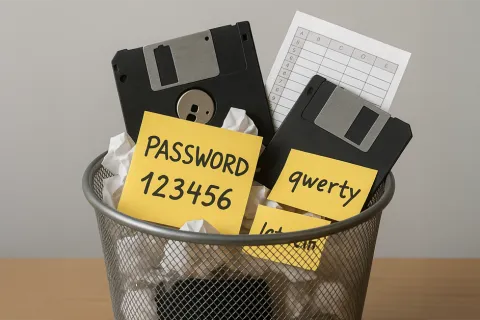
Many employees had relied on a single password that met minimum requirements and was easy to remember. Unfortunately, it had also been reused across multiple systems.
When breaches occurred on less secure platforms, attackers had reused those credentials across more critical accounts in a method known as credential stuffing.
What seemed secure had quickly become a major vulnerability.
A smarter solution:
Businesses had adopted password managers such as LastPass, 1Password, or Bitwarden, allowing teams to use unique, complex passwords for every system while remembering only one master password.
Sharing credentials through email, Slack, or text messages had been convenient in the moment, but it had created a permanent and searchable record.
If an account had been compromised, attackers could easily retrieve sensitive information by searching for keywords like “password.”
This had been equivalent to leaving access keys in plain sight.
A more secure method:
Password managers with secure sharing features had been used to grant access without exposing credentials, with permissions that could be revoked instantly.
When manual sharing had been unavoidable, credentials had been split across channels and updated immediately after use.
Granting admin access had often been the easiest way to avoid delays, but it had created serious risks.
Admin accounts had allowed users to install software, disable protections, modify systems, and delete important data. If compromised, attackers gained full control.
This approach had significantly increased vulnerability to ransomware and other threats.
A safer approach:
Businesses had applied the principle of least privilege, granting access only where necessary and maintaining tighter control over critical systems.
Quick fixes had often become long-term habits.
Over time, these workarounds had added complexity, relied on specific individuals, and weakened overall efficiency. When something changed, the system often failed because the original issue had never been properly resolved.
A better strategy:
Businesses had identified all workarounds in use and replaced them with reliable, long-term solutions that improved efficiency and reduced risk.
Many organizations had depended on large, complex spreadsheets filled with formulas and multiple tabs, often understood by only one person.
If that file became corrupted or the person responsible left, operations were at risk.
These spreadsheets had lacked proper security, scalability, and integration.
A modern approach:
Businesses had documented processes and transitioned to dedicated systems such as CRMs, inventory platforms, and scheduling tools that provided stability, security, and scalability.
Most organizations had already known these habits were risky. The issue had not been awareness, but time and competing priorities.
Consequences had often remained invisible until a major issue occurred.
Safer solutions had required more upfront effort, even though they prevented costly problems later.
Bad habits had become normalized, making them harder to identify and change.
Just like Dry June disrupted personal routines, businesses had needed a similar reset for their technology practices.
Willpower alone had not been enough. Lasting change had come from redesigning systems.
Organizations that had succeeded created environments where secure and efficient behavior became the default.
Company-wide password managers had eliminated unsafe sharing practices.
Automated updates had removed delays and reduced exposure.
Centralized permission management had controlled admin access effectively.
Workarounds had been replaced with structured, documented solutions.
Critical data had been moved from spreadsheets to scalable, secure platforms.
By making the right actions easier, better habits had naturally replaced risky ones.
This had been the value of working with a proactive IT partner. Not just advice, but systems designed to support long-term success.
Businesses that took action had gained stronger security, improved efficiency, and fewer disruptions.
In just 15 minutes, they had been able to identify their biggest risks and uncover practical steps to resolve them.
The process had been simple, clear, and focused on results.
Click here or call (760) 388-2469 to schedule a Discovery Call.
Because some habits were worth breaking, and the best time to do it had always been now.